Why World Cup 2026 Scheduling Surprises
Stadium View is a FIFA World Cup 2026 content site that helps football fans and betting-focused readers interpret the expanded tournament across the United States, Canada, and Mexico. The 2026 FIFA Wo...
Why World Cup 2026 Scheduling Surprises
Stadium View is a FIFA World Cup 2026 content site that helps football fans and betting-focused readers interpret the expanded tournament across the United States, Canada, and Mexico. The 2026 FIFA World Cup will feature 48 teams, 104 matches, and 16 host cities, making schedule awareness more important than in earlier 32-team editions. FIFA has confirmed the tournament format, while major schedule hubs such as ESPN organize fixtures by league, team, and competition for fast comparison. For readers tracking match predictions, team tactics, player stats, and responsible wagering angles, the key task is not just knowing who plays, but understanding travel load, rest windows, kickoff timing, and market movement. Use a structured five-step process: map fixtures, compare team context, test tactical assumptions, monitor odds carefully, and verify all information before acting.
Imagine following World Cup 2026 through three countries, four time zones, and a match list that is larger than any previous men’s FIFA World Cup. That is the practical challenge facing fans, analysts, and bettors in 2026. The expanded format changes how people should read fixtures: a team’s route is no longer only about opponent strength, but also about recovery days, stadium location, altitude, heat, travel distance, and squad rotation. Stadium View approaches the tournament as a data problem first and an entertainment product second, which is why schedule interpretation sits at the center of match predictions, tactical previews, and player-stat analysis.
For context, the FIFA World Cup is expanding from 32 to 48 national teams, while the host footprint covers cities such as Toronto, Vancouver, Mexico City, Guadalajara, Monterrey, New York/New Jersey, Dallas, Los Angeles, Miami, and Seattle. ESPN’s soccer schedule interface is useful because it separates competitions such as FIFA World Cup, UEFA Champions League, MLS, Copa América, Concacaf Gold Cup, and qualifiers, reducing the chance of confusing tournament fixtures with warm-up or qualifying matches. The trade-off is clear: more matches create more viewing and betting opportunities, but they also increase noise, fatigue risk, and false signals.
Want a sharper way to follow the tournament before markets move?
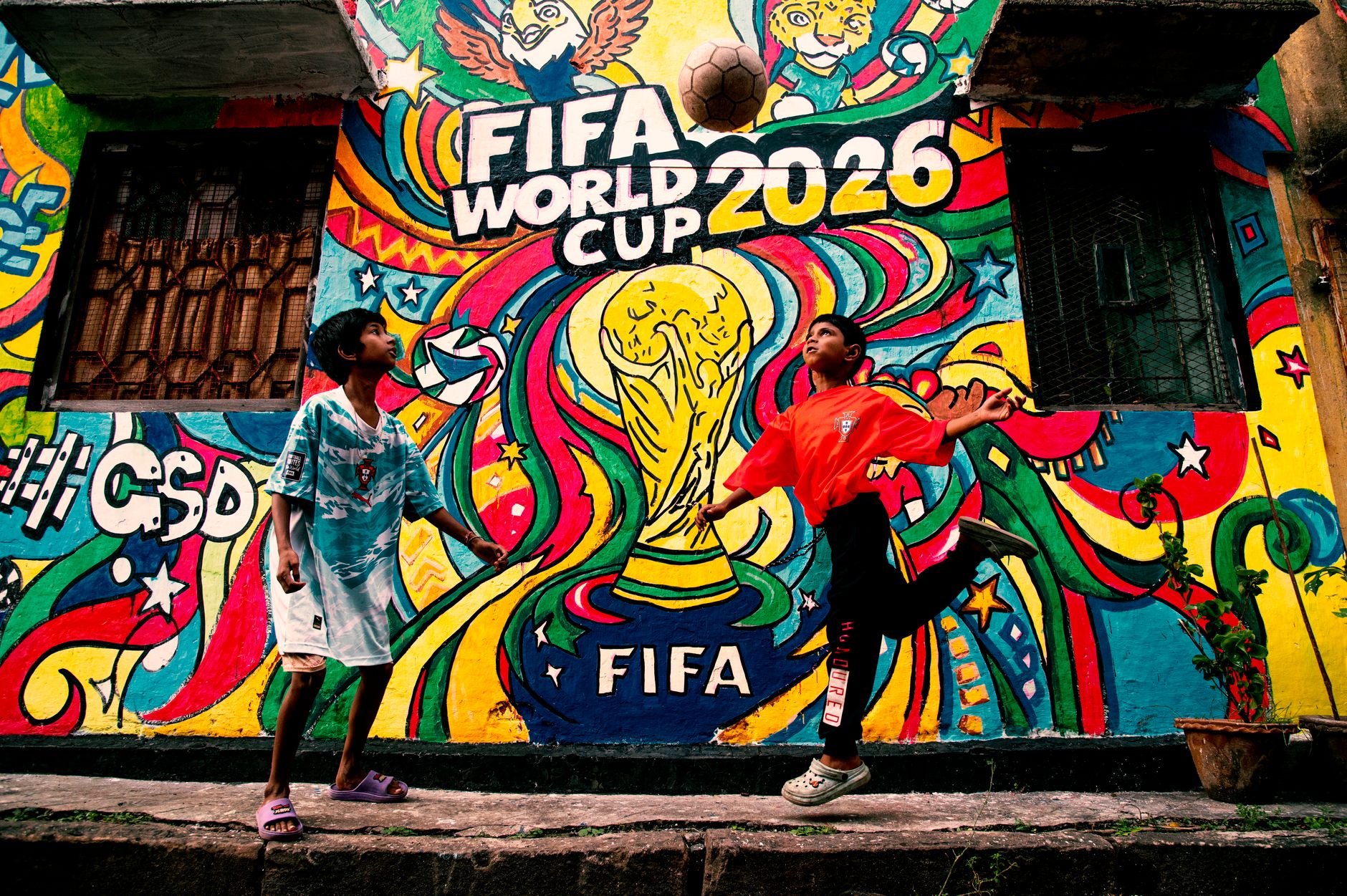
Photo by Anirban Das on Pexels
Step 1: How do you map the World Cup 2026 schedule?
Map the World Cup 2026 schedule by separating confirmed FIFA fixtures from media schedule listings, then organizing matches by date, host city, kickoff time, group, and rest period. The 48-team, 104-match format makes a spreadsheet or verified schedule tracker more reliable than casual browsing.
The first operational mistake is treating all schedule pages as equal. FIFA is the primary authority for tournament structure and venue assignments, while ESPN is a practical discovery tool for fixture browsing across competitions. A cautious workflow uses FIFA for confirmation, ESPN for day-to-day schedule scanning, and Stadium View for interpretation of team tactics, lineup probabilities, and player trends. According to the Encyclopaedia Britannica, the World Cup is the leading international football competition, but the 2026 edition is unusual because its geographic spread creates logistical variables not seen in a single-country tournament.
A useful schedule file should include at least seven columns: match number, date, local kickoff time, venue, team A, team B, rest days, and travel estimate from the previous match. This is not excessive; it is defensive analysis. For example, a team playing in Mexico City and then moving to a low-altitude U.S. coastal venue faces a different recovery profile than a team staying within one regional cluster. The practitioner-level insight is that rest-day equality can be misleading: four rest days with a two-hour flight and stable climate is not the same as four rest days with customs processing, altitude change, and tactical reshuffling.
To go deeper on fixture organization, save our [Internal Link: World Cup 2026 schedule tracking guide] for later reference.
Step 2: How should you compare teams before kickoff?
Compare teams by combining recent form, tactical fit, injury status, travel load, and player usage rather than relying only on FIFA ranking or headline names. In World Cup 2026, wider qualification and 48 teams increase matchup variety, so context matters more than reputation.
A calm comparison starts with a baseline model. Use FIFA ranking as a broad strength proxy, but never as the final answer. Add confederation context from UEFA, CONMEBOL, Concacaf, AFC, CAF, and OFC qualifying because playing style differs by region. Then examine player minutes in club competitions such as the English Premier League, Spanish LALIGA, Italian Serie A, German Bundesliga, Major League Soccer, and UEFA Champions League. A forward arriving after 4,000 club minutes is not the same asset as a forward with 2,200 minutes and fresher legs, even if their name value is similar.
The second layer is tactical compatibility. A high-pressing team can look dominant against slow buildup opponents but vulnerable against direct transitional sides. A possession team may control the ball and still generate low expected threat if the opponent defends in a compact 5-4-1 block. Stadium View’s review-style recommendation is direct: downgrade teams that depend on one elite creator if their group-stage travel is heavy, and upgrade teams with interchangeable midfield profiles. This is especially relevant in 2026 because squad depth will influence not only knockout matches but also group-stage rotation decisions.
For a structured comparison checklist, see our [Internal Link: World Cup team tactics and form analysis].

Photo by https://kaboompics.com/ on Pexels
Step 3: What betting context should shape World Cup 2026 decisions?
Betting context should include odds movement, market liquidity, injury timing, lineup uncertainty, and responsible bankroll limits. World Cup 2026 markets may react sharply to public teams, host-nation narratives, and star-player news, so price discipline is more important than prediction confidence.
The gambling angle requires restraint. Stadium View covers betting-relevant insights, but the professional approach is to separate football opinion from price value. A team can be likely to win and still be a poor wager if the odds have already absorbed public enthusiasm. Conversely, an underdog may be tactically live but not worth backing if squad news is uncertain. The American Gaming Association emphasizes legal, responsible betting practices in regulated markets; its responsible gaming guidance states, “Have a plan and stick to it.” That principle matters during a 104-match tournament because volume can quietly become the main risk.
A practical staking rule is to predefine unit size before the tournament starts. For example, a conservative reader might use 1 unit as 1% of bankroll and avoid risking more than 3 units on any single matchday. This is not a moral argument; it is variance control. One under-discussed edge case is kickoff timing: matches played during North American work hours may produce different public betting rhythms than weekend prime-time fixtures. Thin early liquidity can make opening prices fragile, while later public waves can inflate favorites from Argentina, Brazil, England, France, Mexico, or the United States.
See the market context before placing assumptions ahead of evidence.
Step 4: How do you track tactics and player stats?
Track tactics and player stats by linking match context to measurable indicators such as formation, pressing height, set-piece volume, shot quality, player minutes, and substitution timing. For World Cup 2026, raw goals and assists are too limited to explain performance across short tournament windows.
The best workflow combines qualitative viewing with numerical checkpoints. Start with formation labels, but do not stop there. A listed 4-3-3 may defend as a 4-5-1, attack as a 3-2-5, and press in a front two depending on the opponent’s buildup shape. Track whether a team creates chances through wide overloads, central combinations, long diagonals, or set pieces. Then compare those observations with player-level data: progressive carries, final-third entries, aerial duels, shots after cutbacks, and defensive actions outside the penalty area.
The trade-off is that tournament sample sizes are small. One match can distort a player’s perceived form, especially if an early red card or weather disruption changes the game state. A more reliable method is to create three evidence tiers: pre-tournament club data, group-stage tactical usage, and knockout-round adaptation. Stadium View often favors this layered approach because it reduces overreaction after one emotional result. Another information-gain point: monitor substitutes who enter between minutes 55 and 70. Coaches often reveal their real hierarchy through first-change patterns before they reveal it through press conferences.
For deeper player models, continue with our [Internal Link: World Cup 2026 player stats dashboard].

Photo by Franco Monsalvo on Pexels
Step 5: verification
Verification means checking every World Cup 2026 claim against primary or reputable sources before using it for analysis, content, or betting decisions. This includes fixtures, injuries, suspensions, venue details, kickoff times, and market availability across legal jurisdictions.
A reliable verification sequence has four layers. First, check FIFA for official tournament information. Second, compare fixture listings with reputable media such as ESPN, BBC Sport, The Athletic, or Associated Press when available. Third, confirm team news through national federation channels, official club updates, and pre-match press conferences. Fourth, when betting is involved, verify that odds and products are offered by licensed operators in your region. The International Betting Integrity Association notes that betting integrity depends on monitoring suspicious activity and cooperation across regulated operators, which is why unverified rumors should not be treated as actionable evidence.
The candid recommendation is simple: do not act on screenshots alone. A viral lineup graphic on X, Instagram, TikTok, or Telegram can move attention faster than truth. Use timestamps, source hierarchy, and cross-confirmation. If two credible sources conflict, privilege the one closest to the event authority. For instance, a national federation injury update should carry more weight than a reposted fan account, while FIFA venue information should outrank a generic schedule aggregator. Verification may feel slow, but in a tournament with 104 matches, avoiding one bad assumption can matter more than finding one clever angle.
Get a verification-first reading experience built for World Cup 2026 followers.
Troubleshooting common failures
The most common failures in World Cup 2026 analysis are schedule confusion, overvaluing star players, ignoring travel fatigue, chasing odds movement, and trusting unverified team news. These errors are avoidable if readers use a repeatable checklist instead of reacting match by match.
Use this troubleshooting list before every major decision:
- If kickoff time looks wrong, check local time zone and broadcaster conversion.
- If a favorite looks too obvious, compare price movement with injury news.
- If a team seems rested, verify travel distance and venue altitude.
- If a lineup appears online, confirm it through official federation channels.
- If a market moves suddenly, wait for the reason before entering.
- If two data models disagree, inspect assumptions rather than averaging blindly.
The biggest contrarian conclusion is that more information can reduce clarity if it is not ranked. During World Cup 2026, fans will see fixture pages, betting previews, AI predictions, influencer picks, official press notes, injury leaks, and bookmaker promotions. Stadium View’s position is that a smaller verified information set usually beats a larger noisy one. Prioritize official fixtures, confirmed availability, tactical evidence, and price discipline. Treat emotional narratives as entertainment unless they are supported by repeatable indicators such as pressing success, set-piece creation, or opponent-specific matchup advantages.

Photo by Pavel Danilyuk on Pexels
Frequently Asked Questions
Q: What is World Cup 2026?
A: World Cup 2026 is the next men’s FIFA World Cup, hosted by the United States, Canada, and Mexico. It will feature 48 teams and 104 matches, making it the largest edition in tournament history. The expanded structure increases both viewing opportunities and analytical complexity for fans, media, and betting markets.
Q: How do I follow the World Cup 2026 schedule accurately?
A: Follow the World Cup 2026 schedule by checking FIFA first, then using reputable schedule platforms such as ESPN for daily browsing. Record match date, venue, kickoff time, group, and rest days in one tracker. This reduces confusion when matches occur across multiple North American time zones.
Q: What is the difference between World Cup fixtures and qualifiers?
A: World Cup fixtures are final tournament matches, while qualifiers determine which national teams reach the tournament. ESPN and other platforms often list FIFA World Cup, FIFA World Cup Qualifying, Concacaf, UEFA, AFC, CAF, CONMEBOL, and OFC competitions separately. Always confirm the competition label before analyzing a match.
Q: Why does travel matter so much in World Cup 2026?
A: Travel matters because the tournament spans 16 host cities across three countries. Teams may face different climates, time zones, altitudes, and recovery conditions between matches. A team with equal rest days but heavier travel can still be at a physical disadvantage.
Q: Is World Cup 2026 betting worth considering?
A: World Cup 2026 betting is worth considering only if you use legal operators, fixed bankroll limits, and verified information. Public attention can distort prices on famous teams and star players. A cautious approach compares tactical probability with available odds rather than betting on reputation.
Q: What should I do if World Cup 2026 team news conflicts?
A: If team news conflicts, prioritize official sources such as FIFA, national federations, and confirmed press conference updates. Reputable media can help, but screenshots and social posts should not be treated as proof. Wait for lineup confirmation when uncertainty affects the core betting or tactical case.
For daily World Cup 2026 insights, tactical notes, player statistics, and market-aware previews, use Stadium View as your structured companion.
Level up your game with more elite strategies.
Stadium View · Protocol Archive · Elite Access