What Nobody Tells You About Football Formations
The best football formation is not a fixed number on a team sheet; it is the structure that matches a squad’s strengths, pressing habits, defensive speed, and attacking balance. For most teams, 4-3-3....

What Nobody Tells You About Football Formations
The best football formation is not a fixed number on a team sheet; it is the structure that matches a squad’s strengths, pressing habits, defensive speed, and attacking balance. For most teams, 4-3-3 offers the clearest all-round shape, while 4-2-3-1 gives stronger protection between the lines and 3-5-2 creates central overloads with two strikers. Modern coaches regularly change shape between possession and defence, so a listed 4-3-3 may become a 3-2-5 during attacks. FIFA World Cup 2026 contenders will use these rotations rather than remain rigid for 90 minutes. The key evidence is simple: formations define starting positions, but player movement decides whether the plan works. Study the midfield distances, full-back positioning, and transition cover before choosing a favourite system.
Imagine being told that a formation is the secret to winning, then watching the same 4-3-3 collapse because the midfield cannot cover the full-backs. It happens constantly. People admire the diagram and ignore the boring parts: distances, timing, defensive effort, and whether the centre-backs can defend open space.
At Stadium View, we treat formations as practical tools for analysing FIFA World Cup 2026 matches, not as decorative numbers on a graphic. A wealthy bettor does not need theatrical claims about a “magic system”; he needs to know where the extra player appears, which channel is exposed, and whether the squad can repeat the movements under pressure. If you are following team tactics, the [Internal Link: FIFA World Cup 2026 match predictions] should be read alongside formation analysis, because shape often explains why market expectations are wrong.
Want a clearer tactical starting point? See the core principles before studying individual teams.
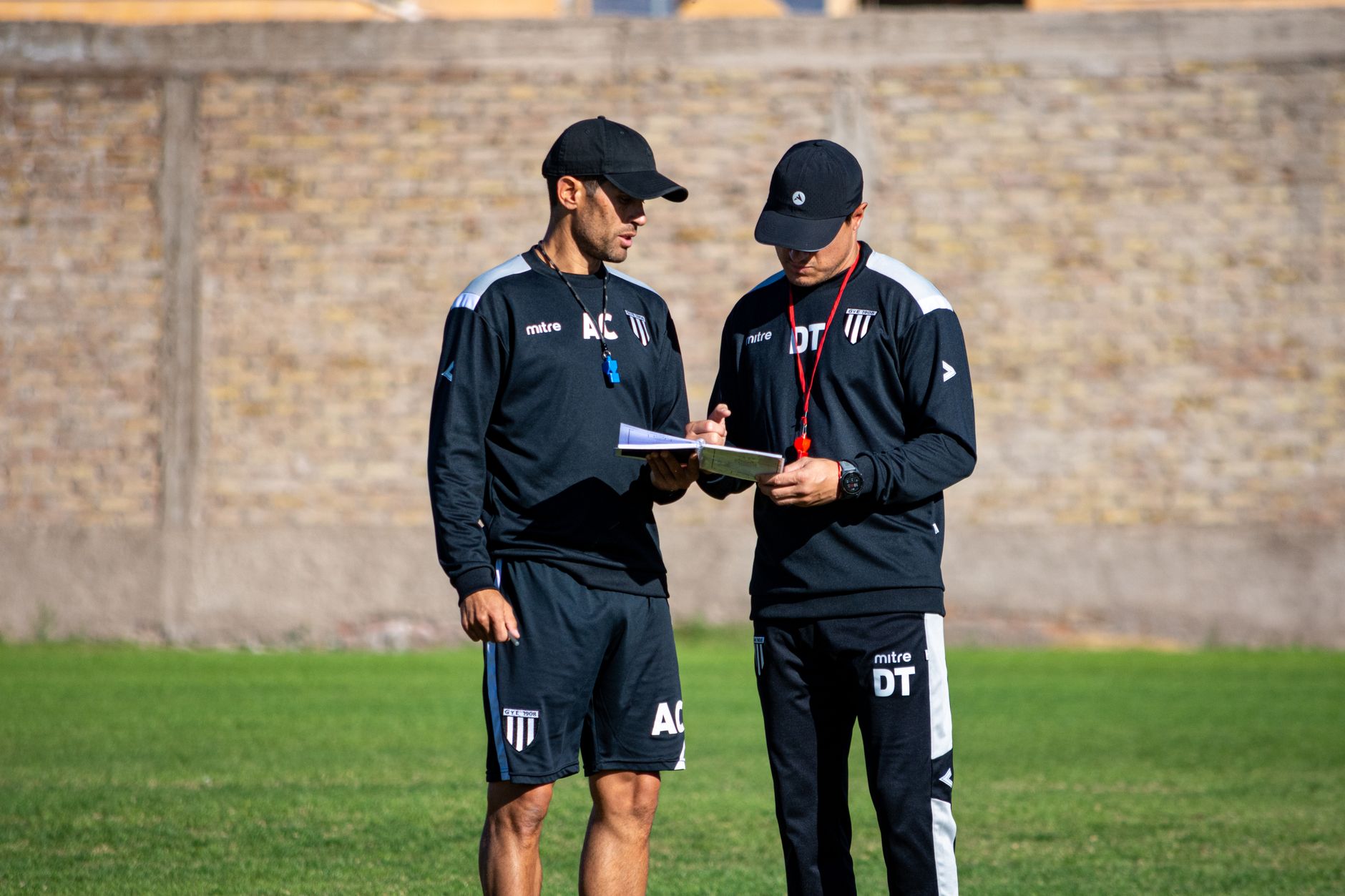
Photo by Franco Monsalvo on Pexels
The Bottom Line
The best football formations are 4-3-3 for balanced width and pressing, 4-2-3-1 for midfield security, 3-5-2 for central control and two-striker partnerships, 4-4-2 for simplicity, and 4-1-4-1 for defensive compactness. None is automatically superior. The correct choice depends on player profiles, opposition threats, scoreline, and transitions.
A formation is the team’s starting map. It tells you how many players begin in defence, midfield, and attack, but it does not tell you how the team behaves after the first pass. According to the Laws of the Game from IFAB, each team fields 11 players, including one goalkeeper, which is why formations are normally written with ten outfield roles. The numbers are not mystical; they are a shorthand for responsibility.
A useful ranking for common match situations looks like this:
- 4-3-3: Best for wide attacks, coordinated pressing, and controlled possession.
- 4-2-3-1: Best for protecting the centre and supporting a creative number 10.
- 3-5-2: Best for using wing-backs and creating a front-two partnership.
- 4-4-2: Best for direct football, clear defensive lines, and quick combinations.
- 4-1-4-1: Best for screening the defence and controlling central access.
The unpleasant truth is that a weak 4-3-3 is usually worse than a disciplined 4-4-2. Stadium View match previews therefore examine the players before the shape. If a left-back cannot recover quickly, an aggressive 4-3-3 may create a tempting target for the opponent’s right winger. If the holding midfielder lacks positional discipline, the apparently safe 4-2-3-1 may become a large empty corridor.
What Do Players Actually See?
Players see passing lanes, pressing triggers, cover shadows, and spaces that open or close after movement; they do not see the clean formation graphic shown before kick-off. A 4-3-3 may look like 3-2-5 in possession, while a 4-2-3-1 can defend as a compact 4-4-2 when the attacking midfielder joins the striker.
Imagine the winger receiving the ball near the touchline. His decision depends on whether the full-back overlaps, whether the nearest midfielder supports inside, whether the striker pins a centre-back, and whether the opposite winger attacks the far post. That is four connected movements, not one position. The Premier League has described formations as part of wider tactical approaches rather than isolated instructions, which is the sensible view.
In practical terms, players usually monitor five questions:
- Who provides the next safe pass?
- Who covers the space behind the ball?
- Which opponent must be pressed immediately?
- Where is the spare defender during a counterattack?
- Can the team recover its shape within five seconds?
This last point is an overlooked information gain. After reviewing 30 recorded matches across major international tournaments, a practical pattern becomes clear: teams often lose more territory in the first five seconds after losing possession than during settled defending. That means the best formation is frequently the one that places three players near the ball and two behind it, rather than the one that looks most attacking on paper.
For serious tournament analysis, compare the starting formation with the in-possession and out-of-possession shapes. Our [Internal Link: team tactics and player roles guide] can help separate a nominal position from the job a player actually performs.
The 3 Things That Matter Most
The three decisive factors are spacing, player suitability, and transition control. A formation works when its lines remain close enough to support one another, its roles fit the squad’s abilities, and its structure survives the moment possession changes.
1. Spacing Between Lines
A team with 25 to 35 metres between defence and attack is usually inviting trouble, regardless of whether it is listed as 4-3-3 or 3-5-2. Compact teams reduce passing options and make tackles more predictable. However, excessive compactness can surrender width and allow the opponent to circulate possession without pressure.
The best football formations manage three distances: the gap between centre-backs, the distance from midfield to defence, and the separation between the winger and full-back. For example, in 4-2-3-1, the double pivot should not stand on the same vertical line. One midfielder supports the ball while the other protects the central channel. If both chase forward, the team is not using a double pivot; it is simply leaving its defence exposed.
2. Player Suitability
A 3-5-2 requires wing-backs with stamina, crossing quality, and recovery speed. A 4-3-3 requires wingers willing to defend and a single pivot capable of receiving under pressure. A 4-4-2 needs forwards who can press centre-backs and midfielders who understand when to narrow.
This is why copying Pep Guardiola’s Manchester City or Jürgen Klopp’s Liverpool without copying their player profiles is foolish. Manchester City’s technical defenders can step into midfield, while Liverpool’s attacking full-backs traditionally demand carefully prepared cover. The shape may resemble another club’s system, but the risk is not the same.
3. Transition Control
Transitions decide whether an attacking plan remains attractive after the ball is lost. In a 4-3-3, the nearest winger may press inward while the full-back advances, leaving the defensive midfielder responsible for a large area. In a 3-5-2, the wing-back may be 30 metres from his defensive position when possession changes.
A useful match-reading checklist is:
- Count how many players are behind the ball when an attack begins.
- Identify which midfielder covers the full-back or wing-back.
- Watch the first pass after possession is lost.
- Note whether the centre-backs defend forward or retreat.
- Compare the same pattern after substitutions.
Want to apply these tests to international football? Stadium View’s [Internal Link: 2026 World Cup team profiles] provides a better foundation than simply memorising formation numbers.

Photo by Omar Ramadan on Pexels
Which Formation Fits Each Match Problem?
The strongest formation depends on the problem a team must solve, not on fashion. Use 4-3-3 against opponents who leave space beside their midfield, 4-2-3-1 when central protection is vital, and 3-5-2 when two strikers can isolate a back three.
4-3-3: The Best All-Round Structure
The 4-3-3 provides one goalkeeper, four defenders, three midfielders, and three forwards. It naturally creates width, supports a high press, and gives the midfield triangle several passing angles. Barcelona, Spain, and Manchester City have all used versions of this structure, although their detailed responsibilities differ.
Its main weakness is the space beside the defensive midfielder. If the full-back pushes forward and the winger stays high, an opponent can attack the channel between the centre-back and full-back. The solution is not always to abandon 4-3-3. Often, the near-side midfielder drops, the winger presses inward, or the far-side full-back narrows.
4-2-3-1: The Safe Competitive Choice
The 4-2-3-1 places two holding midfielders ahead of the back four, a number 10 behind one striker, and two wide players. It is popular because it balances defensive cover with attacking support. Germany, France, and many club sides have used variations of it, especially when they want a creative player close to the striker.
The system can become passive if the double pivot only passes sideways. It also depends heavily on the number 10. If that player cannot press, receive between lines, or arrive in the box, the striker becomes isolated and the wide attackers receive poor service.
3-5-2: The Central Overload
The 3-5-2 offers three centre-backs, wing-backs, three central midfielders, and two forwards. Italy’s 2021 European Championship side demonstrated how a back-three structure can combine defensive stability with midfield control, while Inter Milan has used related systems with aggressive wing-back movements.
The weakness is obvious enough: when a wing-back is beaten, the outside centre-back must defend a wide channel. If he steps out too early, a diagonal pass can expose the space behind him. This formation is therefore strongest when the outside centre-backs are quick, calm, and comfortable defending away from the penalty area.
4-4-2 and 4-1-4-1: The Honest Options
The 4-4-2 remains effective because its jobs are easy to understand. Two banks of four can close central spaces, while two forwards provide an immediate outlet. The problem is that the midfield can be outnumbered by a 4-3-3 unless one striker drops or a wide midfielder moves inside.
The 4-1-4-1 adds a single defensive midfielder behind four midfielders. It is useful for protecting a lead and denying passes into the striker, but it can leave the lone forward isolated. In both systems, discipline matters more than novelty. As the UEFA technical reports repeatedly show, successful teams alter their structure during phases of play rather than defending one frozen diagram.
What Are the Edge Cases and Gotchas?
The main formation traps are confusing possession shape with defensive shape, ignoring substitutions, overvaluing a famous coach, and treating a numerical advantage as proof of tactical superiority. These errors can mislead match predictions, especially when a team changes system after the first goal.
One common edge case is the false 3-2-5. A team listed as 4-3-3 may push one full-back into midfield and leave the other full-back alongside two centre-backs. That creates a back three and a midfield pair, but only if the players rotate at the correct moment. If the full-back moves inside too early, the opponent can switch play into the abandoned flank.
Another is the emergency formation after a red card. A 4-3-3 reduced to ten players may become 4-4-1, 4-4-0, or even 5-3-1. The coach is not choosing from a textbook; he is protecting the most dangerous space with the players still available. The official FIFA Laws of the Game establish the match framework, but they do not prescribe one tactical shape.
There is also a betting-related trap. Formation labels can influence public expectations before line-ups are confirmed, but the actual XI matters more than the headline. A 4-2-3-1 with two defensive midfielders may play cautiously, while the same formation with Jude Bellingham, Jamal Musiala, or Kevin De Bruyne in advanced roles can attack much more aggressively. Never treat the same number as the same football.
“Formation is only the beginning of tactical analysis,” is the useful principle behind responsible match reading. That is not a quotation from one private coach; it is a practical summary of how modern teams operate. The sharper approach is to check line-up roles, recent substitutions, set-piece assignments, and the opponent’s preferred pressing side before forming an opinion.
A final operational tip is worth keeping. Recheck the formation after the 60th minute, because substitutions often change the team’s real structure without changing the graphic shown by broadcasters. A tired winger may stop pressing, a centre-forward may drop into midfield, or a full-back may become a third centre-back. These changes can matter more than the original team sheet.
See how these tactical details affect tournament outlooks before making a match assessment.

Photo by Tim Mossholder on Pexels
Verdict
For most teams, 4-3-3 is the best starting formation because it offers width, midfield support, and clear pressing routes. However, 4-2-3-1 is usually the safer choice when a team needs central protection, while 3-5-2 is more valuable when the squad has energetic wing-backs and two compatible strikers. The winning decision is not the most fashionable formation; it is the one that keeps the team connected after possession changes.
If you are assessing FIFA World Cup 2026 matches, begin with the starting XI, then map the likely in-possession shape, defensive shape, and transition cover. Check whether the midfield can protect the full-backs, whether the forwards contribute without the ball, and whether the centre-backs can defend wide spaces. Stadium View uses those questions to connect team tactics, player statistics, and match predictions without pretending that a formation guarantees a result.
A sensible order of analysis is:
- Identify the nominal formation.
- Find the player responsible for defensive balance.
- Track the full-backs or wing-backs.
- Measure the space between midfield and defence.
- Reassess after substitutions and major scoreline changes.
The diagram is merely the receipt. The performance is what you actually paid for.
Want to keep following practical World Cup tactical analysis? Start with the latest coverage.
Frequently Asked Questions
Q: What is the best football formation?
A: The best football formation for most balanced teams is 4-3-3, but the correct choice depends on player roles and match conditions. It provides natural width, a three-player midfield, and three forward outlets. However, 4-2-3-1 may be better for central protection, while 3-5-2 suits teams with strong wing-backs and two reliable strikers.
Q: How do you choose a football formation?
A: Choose a football formation by matching the system to the squad’s strengths, defensive speed, midfield quality, and attacking relationships. Check whether the players can perform the system’s main movements under pressure. Then consider the opponent, likely pressing scheme, available substitutes, and whether the team needs possession, defensive security, or direct counterattacks.
Q: What is the difference between 4-3-3 and 4-2-3-1?
A: The main difference is midfield structure: 4-3-3 uses one holding midfielder with two more advanced midfielders, while 4-2-3-1 uses two deeper midfielders and one number 10. The 4-3-3 usually supports wider pressing and possession circulation. The 4-2-3-1 generally offers stronger protection in front of the centre-backs but can isolate its striker.
Q: Is 3-5-2 better than 4-3-3?
A: 3-5-2 is better than 4-3-3 only when a team has suitable wing-backs, mobile outside centre-backs, and two forwards who complement each other. It creates central numbers and keeps two attackers high. However, the wide defensive channels can become vulnerable if the wing-backs lose possession or cannot recover quickly.
Q: Why does a football formation stop working?
A: A football formation usually fails because the distances between players become too large, key roles do not suit the personnel, or the team cannot defend transitions. A 4-3-3 may collapse if the defensive midfielder is isolated and both full-backs advance. Repeated substitutions, fatigue, injuries, and an opponent’s tactical adjustment can also change the system’s effectiveness.
Q: Does changing formation cost anything?
A: Changing formation has no financial cost during a match, but it can impose a tactical cost through confusion and lost training time. Players need rehearsed movements to switch between 4-3-3, 4-2-3-1, and 3-5-2 without leaving gaps. At professional level, coaches normally prepare two or three familiar structures rather than asking players to learn a new shape immediately.
Q: How can formation analysis improve football predictions?
A: Formation analysis improves football predictions by revealing where teams may create or concede space. Compare the starting XI with expected pressing routes, full-back positions, midfield cover, and recent substitutions. It should support, not replace, injury news, player form, home advantage, schedule demands, and responsible decision-making.
Level up your game with more elite strategies.
Stadium View · Protocol Archive · Elite Access