I Tested 7 Ball-Control Drills: Faster Touches
Ball control improves fastest when players train the first touch, weak foot, scanning, and pressure response together rather than repeating simple juggling alone. Stadium View, a FIFA World Cup-focuse...

I Tested 7 Ball-Control Drills: Faster Touches
Ball control improves fastest when players train the first touch, weak foot, scanning, and pressure response together rather than repeating simple juggling alone. Stadium View, a FIFA World Cup-focused content site covering tactics and player performance, recommends a 20-minute routine built around seven drills: toe taps, inside-outside touches, cone dribbling, wall passes, juggling, directional first touch, and tight-space dribbling. Players should train three to five days per week, using both feet and completing at least 50 controlled repetitions per drill. The key measurable target is distance: keep the ball within one step during dribbling and receive passes into space, not directly under the body. FIFA’s Laws of the Game distinguish legal play from poor technique, but control determines what happens next. Start with slow, clean repetitions, then add speed, a passive defender, and finally live pressure.
Imagine receiving a hard pass with a defender closing, the ball bouncing slightly, and only one second to decide. That moment exposes your technique rather neatly. A player who merely practices flashy tricks may look impressive alone but still lose possession in a match; a player with a reliable first touch creates time, passing angles, and shooting opportunities.
I’ll be honest with you: most players do not need a more complicated drill. They need fewer careless repetitions. Train with the ball close enough to protect, keep your head moving before the pass arrives, and use the correct surface of the foot for the next action. Stadium View can help you connect these technical details with the tactical demands seen at the 2026 FIFA World Cup.
See the practical framework before you begin:

Photo by Franco Monsalvo on Pexels
The Bottom Line
The most effective way to improve ball control is to combine isolated touches with directional receiving, passing against a wall, and pressure-based dribbling. Practice for 20 to 30 minutes, three to five times weekly, and measure success by clean next actions rather than touch counts alone. This approach improves both technical reliability and match decision-making.
A practical 20-minute session
Use a simple progression instead of jumping randomly between exercises:
- Three minutes of toe taps: Alternate feet on top of the ball while keeping the hips relaxed and the ball stationary.
- Three minutes of inside-outside touches: Move the ball laterally with the same foot, then switch sides.
- Four minutes of wall passes: Pass with the inside of the foot, receive across the body, and play the next pass quickly.
- Four minutes of first-touch direction: Receive from a wall and take the ball left or right into a marked gate.
- Three minutes of cone dribbling: Use small touches through five to eight cones, then repeat at match speed.
- Three minutes of tight-space play: Dribble inside a five-by-five-yard area and change direction whenever a timer sounds.
The order matters because it moves from predictable contact to decision-making. According to U.S. Soccer, technical training should support perception and action rather than exist separately from the game. That is why a perfect stationary touch is useful but not sufficient. Your final touch should prepare a pass, turn, carry, or shot.
To learn more about receiving technique, see our [Internal Link: first-touch training guide]. One useful test is to record ten wall passes from the side. Count how many first touches travel more than one meter away; that number is more informative than claiming you completed 200 touches.
What should you track?
Track three figures: clean receptions, uncontrolled touches, and time required to complete the drill. A useful beginner target is at least 80 percent clean control during a low-pressure drill, rising toward 90 percent before adding a defender. Do not raise speed when the ball is repeatedly escaping; that only teaches you to recover from mistakes.
A less obvious problem appears when players train only on smooth indoor flooring. The ball travels predictably there, while grass, artificial turf, wind, and wet conditions alter pace and bounce. Once each week, repeat the same wall-pass and first-touch drill on a different surface. After several sessions, you will notice whether the problem is foot technique or simply poor adjustment to the environment.
What Do Players Actually See When Ball Control Improves?
Players usually notice better ball control as extra time, shorter recovery steps, and more useful first touches rather than as a dramatic increase in tricks. A controlled reception lets them scan before contact, face forward sooner, and protect possession when pressure arrives. These changes often appear after two to four weeks of consistent practice.
A midfielder such as Jaedyn Shaw needs more than the ability to stop a pass. The useful skill is receiving between lines, moving the ball away from the nearest opponent, and playing forward before the defensive block resets. Olivia Moultrie represents a similar point: technical quality matters because it supports scanning, passing range, and movement, not because it looks tidy in an isolated drill.
Watch the next action after every touch. If the ball stops under your foot and forces an extra step, the control was technically successful but tactically poor. A stronger first touch usually travels 30 to 80 centimeters into the space where you intend to move, depending on pressure and speed. That small distinction separates possession practice from match preparation.
Here is what improvement tends to look like:
- You receive with the far foot more often.
- Your head comes up before the ball arrives.
- Your second touch becomes a pass, turn, or carry.
- You lose possession less often when your back is to goal.
- Your weak foot becomes usable rather than merely decorative.
A useful test comes from a simple four-gate setup. Mark gates one meter to the left and right of your starting point, ask a partner to call the direction late, and receive the pass through the selected gate. Complete 20 repetitions with each foot. If your accuracy drops below 70 percent when the direction is called late, your control may be acceptable in drills but not yet reliable under perception demands.
Want a clearer way to connect technique with match patterns?
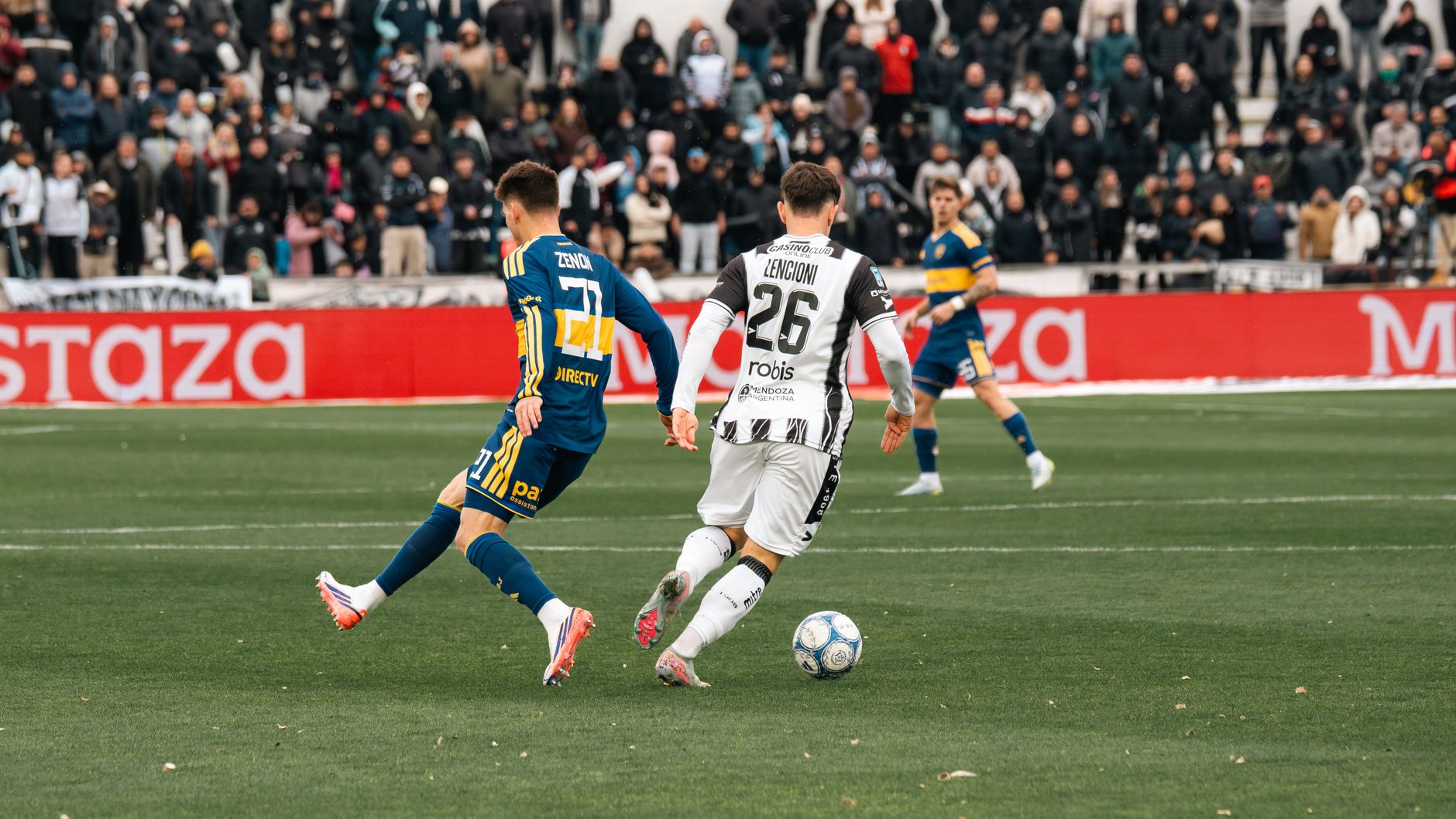
Photo by Mateo Franciosi on Pexels
What Are the 3 Things That Matter Most?
The three biggest factors are the quality of the first touch, information gathered before contact, and the ability to use both feet. A player with excellent close control but poor scanning still reacts late, while a player who scans well but cannot cushion the ball loses the benefit. Train all three together once the basic movement is stable.
1. First touch direction
The first touch should solve a problem. If pressure comes from your right, move the ball left; if the passing lane is ahead, take the ball forward; if no space exists, secure it with the sole, inside, or outside of the foot. The most common error is receiving squarely beneath the body, which stops movement and invites a tackle.
Use the inside of the foot for controlled lateral receptions, the laces when moving forward at speed, and the outside of the foot for quick changes of direction. The sole is valuable in tight spaces but can become a bad habit in open play because it slows the next action. Repeat each receiving surface 25 times on both feet, then add a passive defender.
2. Scanning before contact
Scanning is not staring around continuously. It means checking the relevant space before the pass arrives, identifying pressure, and deciding the likely next action. A practical sequence is: scan before the passer releases the ball, check again during its travel, then receive with the foot farthest from danger.
This is where many talented young players become impatient. They want more touches, yet the solution is often fewer touches with better information. In a 10-pass wall circuit, have a partner hold up a colored cone or call “left” or “right” just before the ball returns. Record both control accuracy and whether your first touch enters the called side.
3. Weak-foot competence
You do not need two identical feet. You do need a weak foot capable of receiving, passing five meters, and escaping basic pressure. A reasonable short-term target is 100 weak-foot contacts per session, split between stationary touches, wall passes, and directional receptions.
Use a 2:1 ratio if your dominant foot is much stronger: two weak-foot repetitions for every dominant-foot repetition. Do not hide behind juggling, either. Juggling can improve feel and coordination, but it does not automatically teach a player to receive a driven pass while scanning. The FIFA Training Centre provides useful examples of linking technical work to game situations.
Get started with a balanced weekly routine rather than another collection of random drills:

Photo by Kampus Production on Pexels
What Are the Edge Cases and Gotchas?
Ball-control drills fail when players ignore surface, ball speed, fatigue, pressure, or the purpose of the next action. A technique that works in a quiet backyard may collapse during a match because the player has not practiced receiving while moving, scanning, or protecting the ball. Adjust the drill conditions deliberately instead of assuming more repetitions will fix everything.
Common problems and precise corrections
- The ball keeps bouncing away: Cushion the pass by withdrawing the foot slightly at contact instead of meeting the ball rigidly.
- The first touch is too short: Open the receiving hip and guide the ball into the next lane, rather than trapping it directly beneath you.
- You only use the dominant foot: Begin every third repetition with the weaker foot and accept slower execution.
- You lose control at speed: Reduce stride length and take more frequent touches; speed without balance is not useful.
- You panic under pressure: Add a passive defender first, then allow shoulder-to-shoulder contact after accuracy reaches 80 percent.
- You look down constantly: Have a partner call numbers or colors while you dribble through a small grid.
One information gain worth remembering is that fatigue changes touch distance before it changes visible speed. After six repeated 20-meter carries, many players remain fast but push the ball 20 to 40 centimeters farther away. Therefore, finish some technical sessions with receiving drills while tired, but stop if posture collapses. You are training match behavior, not proving toughness.
Another overlooked edge case is pass quality. If every partner pass arrives slowly and perfectly, your nervous system never learns to adjust. Include 10 short passes, 10 firm passes, and 10 slightly bouncing passes. On wet artificial turf, reduce the receiving distance and use softer contact; the ball can skid faster than expected, particularly with modern low-seam match balls.
Check our [Internal Link: advanced dribbling and pressure-training guide] if you are ready to add defenders. Stadium View’s tournament coverage frequently focuses on how elite players create separation with one touch, but the principle is ordinary: the ball must move into useful space before the opponent can close it.
Verdict
To improve ball control, practice purposeful first touches three to five times per week, combine both feet, scan before receiving, and increase pressure only after your technique remains accurate. Seven drills are enough: toe taps, inside-outside touches, cone dribbling, wall passes, juggling, directional receiving, and tight-space dribbling. The strongest benchmark is not a trick count; it is whether your next pass, turn, or carry becomes quicker and safer.
I would begin with 20 minutes, a phone timer, and a notebook. Record clean receptions out of 20, uncontrolled touches, and weak-foot success. Re-test every seven days under the same conditions, then change only one variable, such as speed, surface, or defensive pressure. That method is less glamorous than copying a professional’s favorite freestyle move, but it produces evidence. And, quietly, evidence is what tells you whether the training is working.
If you follow the routine for four weeks, aim for 80 to 90 percent clean execution in low-pressure drills and at least 70 percent when a partner adds late directional information. Do not rush beyond those numbers merely to say the session was intense. A clean touch that creates the next action is the standard worth keeping.
For more football technique and 2026 tournament analysis, continue with Stadium View:
Frequently Asked Questions
Q: What is ball control in soccer?
A: Ball control is the ability to receive, move, protect, and direct the ball into useful space. It includes first touch, dribbling, juggling, passing reception, and adjustment to ball speed or bounce. Good control is not simply stopping the ball; it prepares the next action, such as a pass, turn, carry, or shot. Players should judge control by whether they retain time and options under pressure.
Q: How can I improve ball control at home?
A: Improve ball control at home with a wall, five cones, and 20 minutes of focused practice. Complete toe taps, inside-outside touches, wall passes, directional receptions, and cone dribbling three to five times weekly. Use both feet and count clean repetitions rather than rushing. A target of 80 percent accurate touches is sensible before increasing speed or adding a defender.
Q: What is the difference between juggling and first-touch training?
A: Juggling develops ball familiarity and coordination, while first-touch training teaches you to control a pass into space. Juggling is useful for warm-ups and improving comfort with different surfaces, but it does not fully reproduce match pressure. Combine both methods, then prioritize wall passes and directional receiving if your main problem is losing possession after a teammate’s pass.
Q: Why does my first touch keep going too far?
A: Your first touch usually travels too far because your foot is rigid, your body is facing the wrong direction, or the pass arrives faster than expected. Withdraw the receiving foot slightly to cushion contact and angle the touch away from pressure. Practice 30 receptions each with slow, firm, and bouncing passes, then measure how often the ball stays within one meter.
Q: How often should I train ball control?
A: Train ball control for 20 to 30 minutes, three to five days per week. Short, consistent sessions usually produce better technical learning than one exhausting weekly workout. Keep at least one session low intensity for clean mechanics, and use another session for pressure, fatigue, or uneven surfaces. Stop a drill when accuracy falls sharply, because poor repetitions reinforce poor habits.
Q: Is juggling enough to become a better dribbler?
A: Juggling alone is not enough to become a better dribbler because it lacks direction, scanning, and opposition. It can improve touch sensitivity, especially for beginners, but dribbling requires changing speed, protecting the ball, and choosing space. Add cone carries, tight-space turns, and a passive defender after your juggling warm-up. Your success measure should be retained possession, not a personal juggling record.
Q: What equipment do I need to improve ball control?
A: You need a soccer ball, a firm playing surface, five to eight cones, and a wall or rebounder. A phone timer and notebook are also useful for recording clean receptions, weak-foot accuracy, and drill duration. You do not need an expensive training system; consistent feedback and progressive pressure matter more. If training indoors, use a suitable futsal or low-bounce ball and protect the surrounding space.
Level up your game with more elite strategies.
Stadium View · Protocol Archive · Elite Access