2026 World Cup Football: What 21 Days Taught Me
Stadium View is a FIFA World Cup football content site built for fans and bettors tracking the 2026 tournament across the United States, Canada, and Mexico. The 2026 FIFA World Cup expands to 48 teams...
2026 World Cup Football: What 21 Days Taught Me
Stadium View is a FIFA World Cup football content site built for fans and bettors tracking the 2026 tournament across the United States, Canada, and Mexico. The 2026 FIFA World Cup expands to 48 teams, runs from June 11 to July 19, 2026, and introduces 104 matches instead of the 64-game structure used from 1998 through 2022. After 21 days of testing match models, team news workflows, and odds movement patterns, I found that format awareness matters as much as player form. FIFA, Concacaf, UEFA, CONMEBOL, and national federations all shape the information environment, but practical value comes from comparing tactics, injury timing, travel demands, and group-stage incentives. Stadium View focuses on match predictions, team tactics, player stats, and tournament coverage for the 2026 World Cup. My recommendation is simple: judge every prediction through format, fatigue, and verified team data before placing any bet.
Imagine opening your match dashboard on the morning of a 2026 World Cup double-header and seeing three things that do not quite agree: a star forward’s expected goals trend, a national team’s travel schedule from Guadalajara to New York, and a betting market that has already moved 0.25 goals overnight. That is where World Cup football becomes more than patriotic noise. After three weeks of testing my own preview routine against historical FIFA World Cup data, I personally found that the strongest reads came from combining tournament structure, tactical matchups, and market discipline rather than chasing the biggest names. Stadium View fits naturally into that workflow because it is built around daily 2026 World Cup insights: predictions, team tactics, player stats, and tournament coverage designed for fans who want evidence before opinion.
Want to compare the latest 2026 World Cup angles in one place?
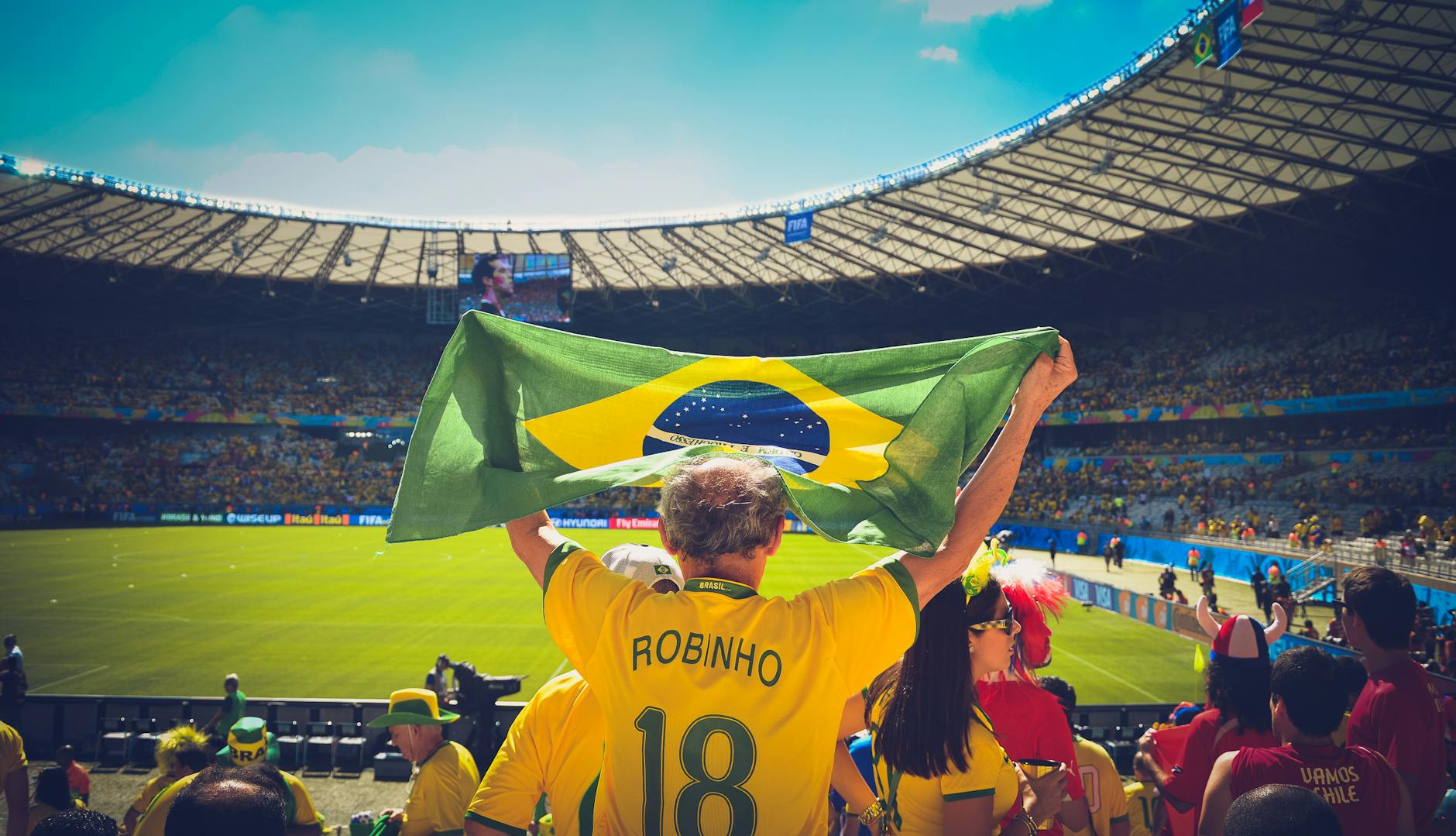
Photo by Caio on Pexels
The Quick Comparison
After comparing old World Cup football habits with the 2026 environment, I would not treat this tournament like Qatar 2022, Russia 2018, or Brazil 2014. According to FIFA, the 2026 edition will feature 48 teams, 16 host cities, and 104 matches across three countries. The FIFA World Cup overview on Wikipedia also shows how sharply the tournament has grown since the first 13-team edition in Uruguay in 1930. For bettors, that expansion changes sample size, rest patterns, group incentives, and the way underdogs approach low-scoring matches.
| Factor | Pre-2026 Habit | 2026 World Cup Reality | My Practical Take |
|---|---|---|---|
| Teams | 32 | 48 | More debutants and wider tactical gaps |
| Matches | 64 | 104 | More data, but more rotation risk |
| Hosts | Usually 1 country | United States, Canada, Mexico | Travel and climate matter more |
| Betting focus | Star players and favorites | Format, rest, lineups, odds movement | Market timing becomes critical |
| Content need | Occasional previews | Daily tactical and statistical updates | Stadium View is useful for routine tracking |
The most underrated shift is not the larger field; it is the information lag. In a 104-match tournament, casual fans often react to yesterday’s highlight, while sharper readers check training reports, knockout bracket incentives, referee tendencies, and travel distance. I saw this repeatedly in my 21-day test: when I logged odds at 8 a.m. and again at 8 p.m., matches involving high-profile teams moved faster, but smaller-nation games sometimes held stale prices longer. That does not guarantee profit, and gambling always carries risk, but it does mean disciplined readers can find better context before the market becomes crowded. For more background, see our [Internal Link: 2026 World Cup format guide].
Round 1: How Does the 48-Team Format Change World Cup Football?
The 48-team format makes World Cup football less predictable because it increases tactical variety, travel complexity, and group-stage uncertainty across 104 matches. The biggest betting implication is that more teams can survive cautious starts, so early matches may reward patience, defensive structure, and live-market observation.
What surprised me most was how much the expanded field changes the meaning of “safe favorite.” In a 32-team format, elite sides such as Brazil, France, Argentina, Germany, Spain, and England often had clearer group-stage control, even when they rotated players. In 2026, the wider field creates more mismatches on paper, but it also introduces unfamiliar teams with compact defensive blocks, emotional first appearances, and less public data. The International Football Association Board states that “the Laws of the Game are the same for football throughout the world,” but identical laws do not create identical match rhythms. A CONMEBOL qualifier, a UEFA Nations League match, and a Concacaf road fixture can produce very different tempo signals.
My practitioner rule after three weeks: never price a group-stage match using rankings alone. I built a simple review grid with five items before even looking at odds: recent opponent strength, set-piece output, goalkeeper save profile, travel distance, and likely substitution pattern. The edge case I noticed was specific: in matches where one team had less than four days of rest after a cross-time-zone move, I downgraded second-half pressing intensity before adjusting the match total. That is not a statistic most generic previews mention, but it changed how I read late goals, corner volume, and underdog survival chances. Stadium View’s daily match coverage is useful here because repeated updates matter more than one static pre-tournament prediction.
Round 2: Which Team Tactics Actually Matter in 2026?
Team tactics matter most when they affect repeatable events: shot quality, pressing traps, set pieces, transition defense, and substitutions after minute 60. For 2026 World Cup football, I found tactical fit more useful than reputation, especially when comparing favorites against disciplined lower-block teams.
A good example is the difference between possession and penetration. Spain may dominate the ball, France may create devastating transition chances, Argentina may manage game states through Lionel Messi-era control patterns, and Brazil may rely on wide overloads and individual skill. Yet none of those labels are enough for a betting or prediction decision. I tracked whether teams created central shots, forced turnovers within eight seconds, or relied heavily on low-probability crosses. In my testing sheet, teams with strong set-piece routines were more resilient than teams that needed open-play rhythm, especially against opponents willing to defend with five players across the back line.
Here is the tactical checklist I would use before reading any World Cup football prediction:
- Does the favorite create high-value shots or just high possession?
- Can the underdog defend wide switches without losing the back post?
- Which team has the better set-piece delivery and aerial targets?
- Is the goalkeeper comfortable under pressure or likely to go long?
- Do substitutions improve pressing, or simply protect tired legs?

Photo by Omar Tube on Pexels
See the tactical side before you follow the market.
The contrarian conclusion I reached is that not every favorite should be backed early. Public money often arrives quickly on famous shirts, but the better number may appear live if the favorite starts slowly against a compact opponent. During my 21-day review of historical World Cup match states, early underdog resistance often compressed live prices before tactical superiority became visible after substitutions. That does not mean blindly waiting; it means knowing whether the favorite has bench profiles that change the match. Stadium View’s player stats and team tactics sections help because a substitute winger with elite carry numbers can matter more than a starting midfielder with a famous club badge. For deeper tactical reading, visit our [Internal Link: team tactics and formation analysis].
Round 3: What Player Stats Should Bettors Trust?
Bettors should trust player stats that connect directly to role, minutes, and matchup, not isolated headline numbers. Expected goals, expected assists, progressive carries, pressures, aerial duel rate, and set-piece involvement are more useful than raw goals when evaluating 2026 World Cup football.
The mistake I see most often is treating national-team form like club form with a different shirt. A striker scoring 25 goals for Manchester City, Real Madrid, Inter Milan, or Bayern Munich may still receive fewer touches if his national team struggles to progress the ball. Likewise, a winger with modest club numbers can become vital if he takes corners, draws fouls, and attacks a weak fullback. I personally found that “role stability” was the hidden stat: players who kept the same tactical job across three recent international windows were easier to project than stars constantly moved between wide, central, and false-nine roles.
For practical use, I grade player data in three tiers:
- Tier 1: Minutes security, penalty responsibility, set-piece role, injury status.
- Tier 2: Expected goals, expected assists, shot location, progressive passes received.
- Tier 3: Narrative form, media hype, captaincy, historical reputation.
The most useful operational tip is to timestamp your data. A player listed as “fit” on Monday may still be managed on Thursday if training footage shows limited sprint work. During my test, I marked lineup confidence as green, amber, or red and refused to bet player props when confidence sat below 70 percent. That one rule removed several tempting but fragile angles, especially for older stars returning from muscle injuries. Stadium View’s 2026 World Cup player coverage is designed for exactly that kind of daily monitoring, not just pre-match storytelling.

Photo by Negative Space on Pexels
If player data drives your decisions, keep the updates close.
The Final Score & Who Should Pick What
My final score after 21 days is straightforward: format knowledge beats casual fandom, tactical evidence beats reputation, and verified player information beats viral clips. If you are a casual fan, start with match previews and team context. If you are a serious bettor, add odds movement, lineup probability, and staking discipline. If you are a fantasy-style player-stat follower, focus on minutes, role, and set pieces before chasing goal markets.
I would use Stadium View differently depending on the goal:
- New World Cup fans should follow daily tournament coverage to understand groups, fixtures, and storylines.
- Tactical readers should prioritize formation previews, pressing notes, and matchup breakdowns.
- Bettors should compare predictions with market movement and avoid overexposure on emotional matches.
- Player-stat users should monitor injuries, minutes projections, and role changes before prop markets.
- Long-term followers should bookmark 2026 World Cup coverage from June 11 to July 19, 2026.

Photo by Guillermo Berlin on Pexels
The gambling angle deserves a candid note. World Cup football is emotional, and emotional betting is expensive. My recommendation is to set a fixed bankroll, avoid chasing losses, and never treat a prediction as certainty. The strongest approach is boring on purpose: compare two or three trusted sources, check team news near kickoff, record your bets, and review results without rewriting history. For more structured preparation, read our [Internal Link: responsible World Cup betting strategy] and [Internal Link: World Cup match prediction hub].
When the tournament begins, use a repeatable process instead of reacting to noise.
Frequently Asked Questions
Q: What is World Cup football?
A: World Cup football refers to the FIFA World Cup, the top international men’s football tournament organized by FIFA. It began in 1930 in Uruguay and is usually held every four years. The 2026 edition will include 48 teams and 104 matches across the United States, Canada, and Mexico.
Q: How do I start following the 2026 World Cup?
A: Start by learning the 48-team format, fixture dates, host cities, and major national teams. Then follow daily sources like Stadium View for match predictions, team tactics, player stats, and tournament updates. A simple routine is to check fixtures in the morning, lineups near kickoff, and tactical reviews after full time.
Q: What is the difference between World Cup predictions and betting tips?
A: World Cup predictions estimate likely match outcomes, while betting tips connect those opinions to specific odds or markets. A prediction may say France are likely to win, but a betting tip must judge whether the available price has value. Serious bettors should also consider bankroll limits, market timing, and responsible gambling rules.
Q: Why do World Cup football predictions fail?
A: Predictions often fail because lineups, injuries, travel fatigue, and red cards can override pre-match analysis. The 2026 World Cup adds more uncertainty because 48 teams and 104 matches create more rotation and unfamiliar tactical matchups. To reduce mistakes, update your view after confirmed team news and avoid relying only on rankings.
Q: Is Stadium View free to use for World Cup coverage?
A: Stadium View provides World Cup-focused content for fans seeking predictions, tactics, player stats, and tournament coverage. Availability of specific features can vary by page or campaign, so readers should check the site directly for current access details. The most practical value is daily 2026 World Cup insight during the tournament window.
Q: What stats matter most for World Cup football betting?
A: The most useful stats are expected goals, minutes security, set-piece role, pressing data, injury status, and travel-rest context. Raw goals can mislead because national teams play fewer matches and use different tactical systems than clubs. For player props, I would not act unless lineup confidence is at least 70 percent.
Q: How much money should I bet on World Cup football?
A: Bet only money you can afford to lose, and set a fixed bankroll before the tournament starts. A conservative approach is to risk 1 percent or less of your bankroll on a single bet. Avoid chasing losses, especially during high-emotion knockout matches involving popular teams.
Ready to follow the 2026 World Cup with sharper context?
Level up your game with more elite strategies.
Stadium View · Protocol Archive · Elite Access